silver-tipped arrows
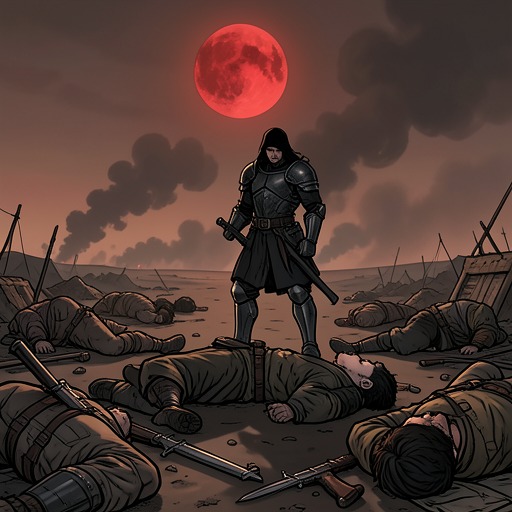
The Vampire Prince’s BrideSilver-tipped arrows are the decisive weapon in Darius’s encounter with the Rebeluna shifters. Their importance lies not merely in their ability to injure supernatural opponents, but in the tactical logic they embody: silence, concealment, precision, and a willingness to adapt older vampire warfare to an enemy that can detect gunpowder long before a gunman is within range.
Design and Tactical Purpose
Darius carries a bow and a quiver full of silver-tipped arrows while leading his forces through a dense forest. The choice is deliberate. Guns are described as nearly useless against shifters because the creatures can detect the scent of gunpowder from a mile away. Arrows offer the opposite advantage: they can be fired without a report, and their lack of gunpowder makes them harder to anticipate. In the forest, where wind, animal calls, and moving foliage conceal approach and position, the bow becomes an especially appropriate weapon.
The arrows also reflect Darius’s practical command style. He is not using them as ceremonial relics or as symbols of vampire tradition; he treats them as specialized equipment selected for a specific enemy and terrain. Their silver tips identify them as weapons designed for supernatural combat, while the bow allows him to preserve stealth until the moment of impact.
Use in the Rebeluna Ambush
When a faint rustling comes from the trees after the wind has stopped, Darius recognizes the sound as an ambush. Without breaking stride, he turns and fires into the darkness. The arrow strikes an unseen target with a solid impact, and a howl confirms that the shot has found a shifter. The weapon therefore functions first as a detection and disruption tool: it exposes the hidden enemy before the entire force has revealed itself.
The ambush quickly becomes an assassination attempt directed at Darius. A bear shifter attacks him from the treetops, transforming in midair and swinging massive paws at his head while wolves, a panther, and other shifters isolate his men. Darius concludes that the attackers are counting on the bear to kill him, while the remaining shifters prevent his soldiers from assisting. The arrows are consequently placed at the center of a struggle over command survival, not merely an exchange of fire.
The Bear-Shifter Kill
After slipping beneath another attack, Darius retrieves his bow and arrow and faces the bear again. He notes that a sniper’s rifle would have served the assassins better than their traditional approach, exposing the contrast between modern tactical possibilities and the old ways of fighting still favored by many vampires. Yet his own weapon proves sufficient. He nocks an arrow, stands his ground, and sends it into the bear’s eye.
Two additional arrows strike the bear in the heart. The sequence is controlled rather than accidental: the first shot disables the immediate threat, and the follow-up shots ensure that the powerful shifter cannot recover. The bear collapses, her huge chest still heaving, marking the reversal of the scene’s central value. Darius begins the encounter surrounded and targeted for death; the precision of the silver-tipped arrows changes the balance, leaving the would-be executioner defeated.
Consequences and Narrative Significance
Once the bear falls, Darius turns the bow against the shifters attacking his men. He fires rapidly and brings down three of them before they understand that their central weapon has been lost. The surviving wolves scatter into the trees, while shifters who have not transformed become birds and flee through the air. Darius continues shooting as they escape, demonstrating that the arrows remain useful across changing forms and directions of movement.
One arrow pierces an eagle shifter’s shoulder joint and brings the creature down alive. When one of Darius’s men raises a revolver, Darius orders him to hold fire and take the fallen eagle prisoner. The arrows thus produce two different outcomes within the same engagement: lethal force against the bear and disabling force against a surviving opponent whose capture may yield information about the assassination attempt. Their function is not indiscriminate destruction; under Darius’s command, they are instruments of selective violence and intelligence gathering.
The silver-tipped arrows also sharpen the scene’s contrast between inherited combat habits and effective adaptation. Darius criticizes the attackers for relying on antiquated methods even as he uses a weapon associated with an older age, because the bow has been chosen with modern tactical awareness. Its value comes from how it is deployed: silently, at close precision, against vulnerabilities such as the eye, heart, and shoulder joint. In the ambush, the arrows turn stealth into control, transform Darius from target into counterattacker, and leave the Rebeluna’s surviving forces unable to complete their mission.